What does VALORANT Champions Shanghai mean for the 2026 season and how do you follow the group stage?
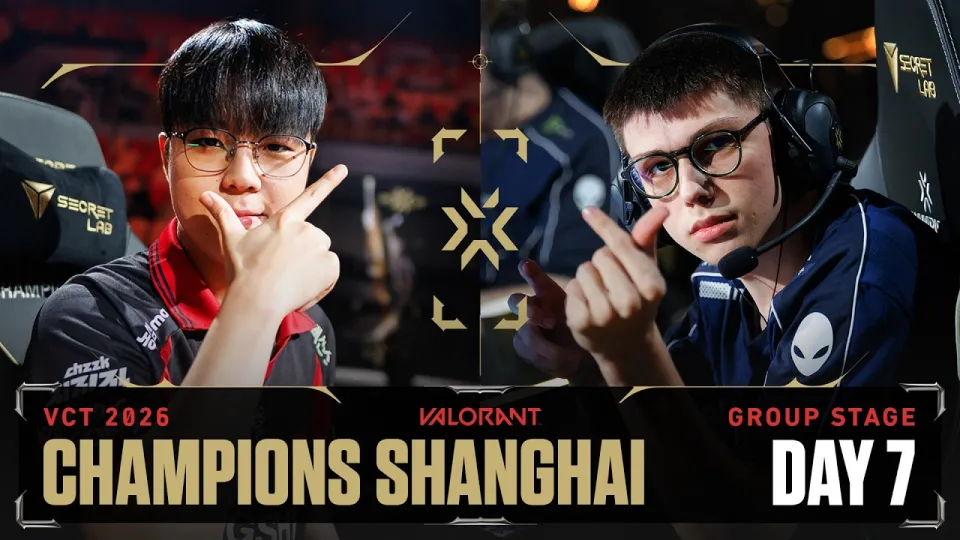
Video: VALORANT Champions Shanghai — Group Stage — Day 7
Want articles like this for your own video to promote it on YouTube and Google? Order them through the Telegram bot @sat_sit_bot. It writes articles around your video, embeds the video and publishes them on popular niche websites (no ads). Free trial — 50 articles.
· based on the channel VALORANT Champions Tour
VALORANT Champions Shanghai is the final international event of the 2026 VCT season, where sixteen teams from the Americas, CN, EMEA and Pacific regions play for the world title between September 24 and October 18. The group stage decides which eight rosters reach the playoffs, and Day 7 of that stage is the broadcast covered by the VALORANT Champions Tour. For schedules, bracket updates and announcements, the official hub is the VALORANT Esports account on X.
The event closes a season that already broke its own script: two Masters events produced two different champions, and the description of the Day 7 broadcast frames Shanghai as the moment when familiar names, new contenders and a fearless generation of challengers finally meet on one stage.
How the VALORANT Champions Shanghai group stage is structured
The group stage is a sixteen-team, four-group format in which every series is a best-of-three and only the top two teams in each group advance. Sixteen is the largest field of the year, and it is split evenly across the four international leagues, which is why the seeding debate is as loud as the gameplay.
- Sixteen teams are drawn into four groups of four, with teams from the same region separated where possible.
- Each team plays the other three teams in its group once, all matches best-of-three.
- The top two teams per group move to the playoffs; the bottom two are eliminated.
- Playoff seeding follows group placement, so winning a group usually means a softer bracket path.
- From the playoffs onward the format switches to best-of-five, which changes map-pick strategy considerably.
Because the group stage is short, a single loss to a lower seed can decide a team's tournament. That is exactly the scenario viewers complain about when they see a favourite drop a round against a force-buy or lose a five-versus-two retake.
What happened on Day 7 of the group stage
Day 7 was a long broadcast day built around multiple group-stage series, and the VOD on the VALORANT Champions Tour channel runs for hours rather than a single match. The most visible talking point in the chat was not a clutch but the number of technical pauses that interrupted the flow of the matches.
Several viewers asked outright why so many tech pauses occurred, and one popular comment joked about an endless series of them. A spoiler-blocking comment with timestamps also noted that edits might be needed because of a pause. For anyone watching the replay, that matters practically: the pauses inflate the runtime, so the match clock and the video clock drift apart.
Gameplay highlights from the day were fewer in the discussion than structural complaints. One viewer flagged a specific moment where a Yoru clone briefly looked like it was helping hold a site, and another praised a veteran player's performance in emphatic terms. Neither changes the standings, but both show how much of the conversation around a long group-stage day is driven by small, strange moments rather than the scoreline.
Why viewers argue about China's representatives at Champions
The sharpest debate around the Shanghai group stage concerns the strength of the CN region relative to its slot allocation. One widely liked comment argued that stronger teams in other regions missed the event entirely, implying the sixteen-team field is not purely meritocratic.
A second, harsher line of criticism focused on how CN teams lose rounds: dropping unlosable situations against eco rounds, losing five-versus-two retakes, and running out of ideas when set strategies break down. That is a coaching and adaptation critique as much as a mechanical one, and it is the kind of problem that gets punished immediately at a global event.
Counterpoints exist in the same comment section, including blunt regional pride and frustration aimed at individual players. The useful takeaway for a neutral fan is narrower: at Champions, the gap between a prepared team and an unprepared one shows up fastest in save and eco rounds, because those are the rounds where utility discipline and default setups matter more than aim.
How to watch the Day 7 VOD without spoilers
The Day 7 broadcast is available on the VALORANT Champions Tour YouTube channel, and the practical way to watch it is with the spoiler problem solved first. The video is a full-day VOD, so it contains several series back to back.
- Use the timestamp comment pinned by the spoiler-blocking viewer to jump between matches instead of scrubbing blind.
- Expect gaps where technical pauses were cut or left in; a long silent stretch is usually a pause, not a missing match.
- Watch map by map rather than series by series if you want to study a specific team's map pool.
- Keep the official channels open for bracket context: https://www.valorantesports.com/news carries results and schedule updates.
If you only care about one team, the group stage is still worth watching in full for that roster, because best-of-three series reveal pick-and-ban priorities that playoff best-of-fives hide.
What the group stage tells us about the playoff bracket
The group stage at VALORANT Champions Shanghai functions as a filter, and the signals it produces are more reliable than the scorelines suggest. Teams that win their groups usually do so by controlling eco rounds and closing out retakes, the exact areas critics say CN representatives struggled with on Day 7.
A second signal is map depth. In a best-of-three, a team needs three comfortable maps; in a best-of-five playoff, it needs four or five. Rosters that look dominant in groups but rely on two maps tend to get exposed in the bracket, which is why analysts watch the third map of every group series closely.
A third signal is composure under pauses. Long technical stoppages break momentum, and the teams that reset fastest after a pause often carry that habit into playoff series where the stakes are higher and the breaks are longer.
Useful links for following VALORANT Champions
All official VALORANT Esports channels are listed in the broadcast description, and each serves a different purpose during a live event. Use them together rather than relying on a single feed.
- https://x.com/valorantesports — fastest results, bracket updates and announcements.
- https://www.twitch.tv/valorant — live broadcast with chat.
- https://www.youtube.com/@ValorantEsports — full VODs, including the Day 7 group stage broadcast.
- https://www.instagram.com/valorantesports/ and https://www.tiktok.com/@valorantesports — clips and behind-the-scenes content.
- https://www.facebook.com/ValorantEsports/ — event posts and community updates.
- https://www.valorantesports.com — official news, schedule and event information.
Final takeaway
The Day 7 group stage broadcast is a useful snapshot of where VALORANT Champions Shanghai stands: a sixteen-team field, a best-of-three group phase that punishes single mistakes, and a viewer base that is openly skeptical about seeding and production quality. The technical pauses and the CN debate dominate the comment section, but the competitive story is simpler — eight playoff spots, decided fast, with map depth and eco-round discipline as the real separating skills. The full VOD is published by the VALORANT Champions Tour, which also produced the broadcast and the surrounding analysis. For bracket updates and the next stage of the event, follow the official VALORANT Esports account on X.
Key takeaways
- VALORANT Champions Shanghai runs September 24 to October 18 and crowns the 2026 world champion.
- Sixteen teams from Americas, CN, EMEA and Pacific compete for the biggest trophy of the year.
- Two Masters events in 2026 produced two different champions, so Shanghai is the tiebreaker.
- Day 7 of the group stage is a full broadcast VOD on the VALORANT Champions Tour channel.
- Group stage matches are best-of-three; the format moves to best-of-five in the playoffs.
Source: VALORANT Champions Shanghai — Group Stage — Day 7 · Markdown version
Questions & answers
How many teams play at VALORANT Champions Shanghai?
Sixteen teams qualify, split evenly across the Americas, CN, EMEA and Pacific regions. They are drawn into four groups of four, and the top two teams in each group advance to the playoffs. The event runs from September 24 to October 18.
Why were there so many technical pauses on Day 7?
The broadcast was interrupted repeatedly by tech pauses, which viewers noted in the comments and which one timestamp list flagged as a reason the VOD may need edits. The pauses stretch the runtime of the replay, so the video clock no longer matches the in-game match clock.
Are group stage matches best-of-three or best-of-five?
The group stage uses best-of-three series, while the playoff bracket moves to best-of-five. That shift matters because a team needs three reliable maps in groups but four or five to survive a playoff series.
Where can I watch the full Day 7 broadcast?
The complete group stage day is published as a VOD on the VALORANT Champions Tour YouTube channel. For live matches, results and bracket updates, the official channels are https://www.twitch.tv/valorant and https://x.com/valorantesports.